

RECURLY ENGAGEMENT — ARCHITECTURE BRIEF
Native engagement vs. bolt-on CDP
Four metrics finance and growth leaders should measure side-by-side: time-to-value, 3-year cost, data freshness, and vendor surface area.

 Compare approaches
Subscription leaders evaluating native vs bolt-on architectures


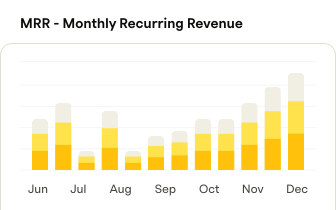

Grow recurring revenue at every stage
Grow recurring revenue at every stage
 Subscriptions
Subscription management for high-volume digital commerce

Time-to-value: 8 weeks vs 16
A native engagement layer reads subscriber and billing state directly. A bolt-on CDP needs ETLs, identity resolution, and a separate decisioning layer — typically doubling time-to-first-play.


3-year cost: $240K vs $720K
Bolt-on CDP TCO compounds: license, integration build, ongoing pipeline maintenance, and the analytics seat tax. Native folds into the platform you're already paying for.

Data freshness: 95% vs 62%
Native runs on the same write that updates billing — so a downgrade, dunning event, or pause is actionable in seconds, not the next nightly sync window.
 Commerce
Native subscription management app for Shopify
Vendor surface area compounds the bill: every additional system is another contract, another DPA, another integration to keep alive when product schemas change.
Support memberships, bundles, and prepaid plans with no-code setup, pricing experiments, and API integrations.
Offer subscribers a self-service portal to skip, swap, or cancel plans.
 Engage
Personalized in-app subscriber prompts
Predict cancellations and trigger targeted flows that retain subscribers.
Build and test subscriber paths that drive product adoption.
Sync subscriber actions, like upgrades/downgrades to Recurly Billing instantly.
 RevRec
Automated revenue recognition for recurring revenue models
Cut revenue compliance costs and time by removing manual, error-prone work.
Automate ASC-606 and IFRS-15 compliance.
Get real-time reporting and analytics in prepackaged reports built for subscriptions.
What four metrics actually decide

Acquire and retain more
- Personalized acquisition and retention offers
- Real-time, in-product engagement
- AI-powered subscriber insights
Launch quickly, iterate often
- Flexible plan launches and testing without engineering
- Personalized journeys with unified billing + engagement data.
- Built-in retention tools and insights to prove impact
Simplify complexity, and scale securely
- Secure platform for billing and payments
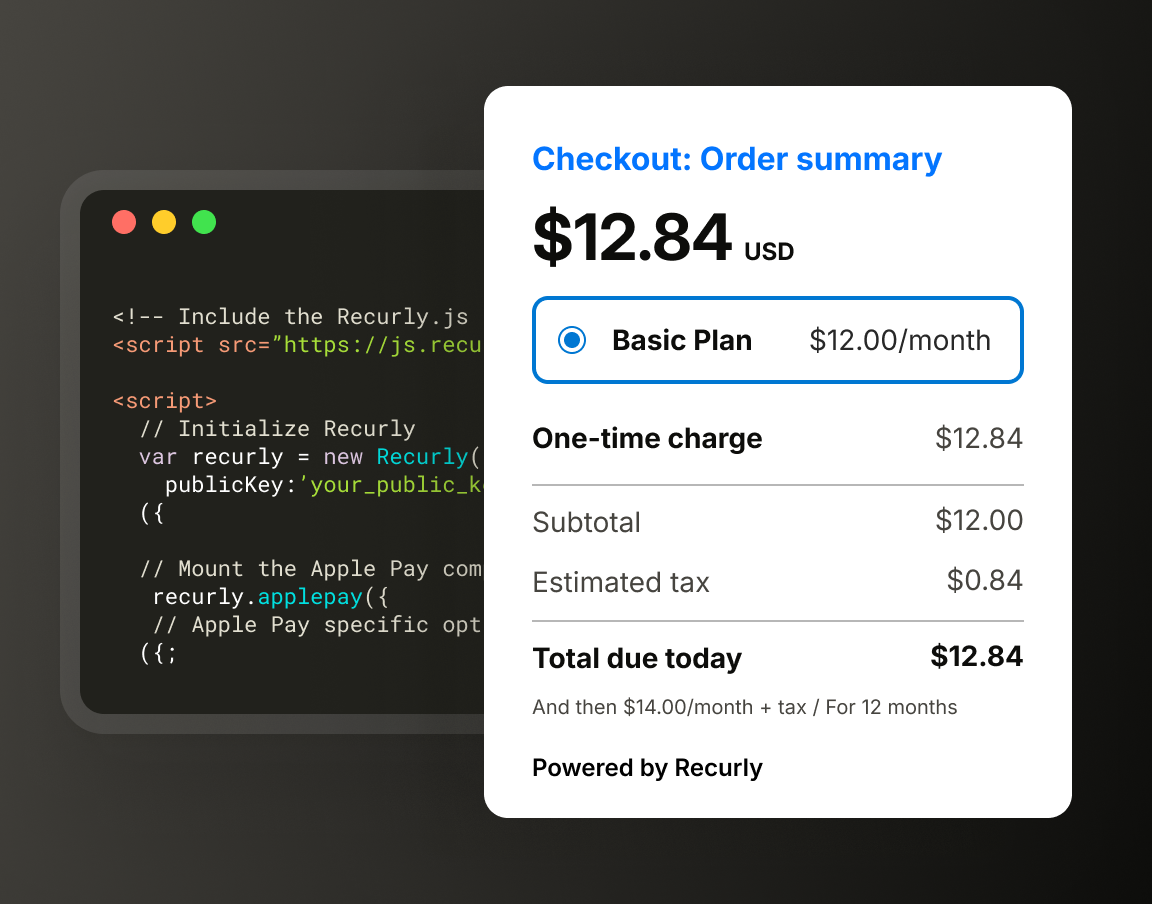
- Low-code plan management for faster launches
- Seamless integration with ERP, CRM, and data systems
Automate compliance, improve forecasting
- Automated billing, invoicing, and recognition
- Smart revenue recovery tools that reduce churn
- Real-time reporting and forecasting
Why surface area matters
Native vs bolt-on, at a glance
8 wks
to value, native (vs 16 wks bolt-on)
$240K
3-yr cost native (vs $720K bolt-on)
95%
data freshness, native (62% bolt-on)
1 vendor
surface area native (3+ bolt-on)
RECURLY ENGAGEMENT
AI that works for you
Recurly Engagement is built on the same data model as Recurly Billing — so every subscriber signal is decision-ready, not warehouse-ready.
 Explore Compass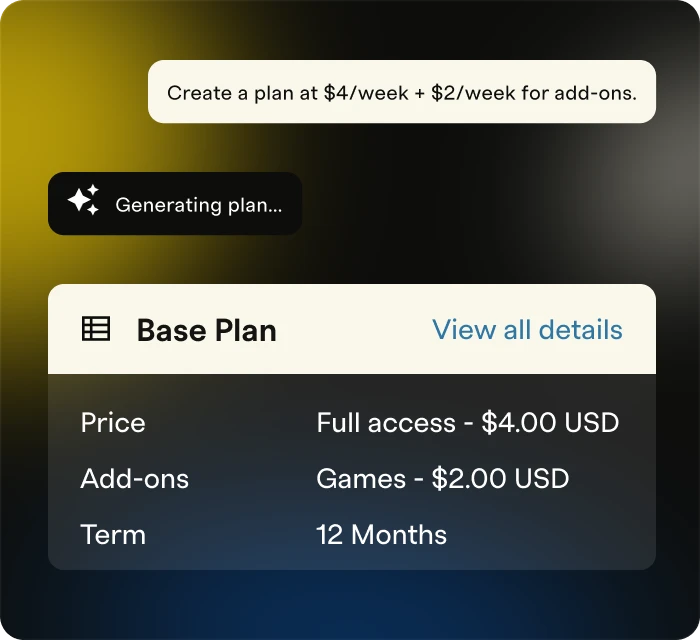
One write, one source of truth
Engagement reads the same subscriber state Billing writes — no separate identity layer, no event drift between systems.
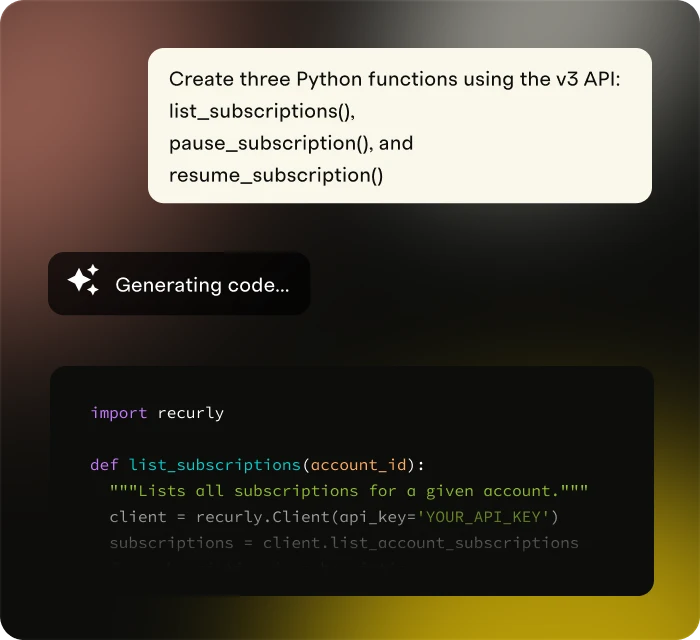
Lower vendor surface area
One contract, one DPA, one roadmap. No CDP sprawl. Less to maintain when product schemas change.
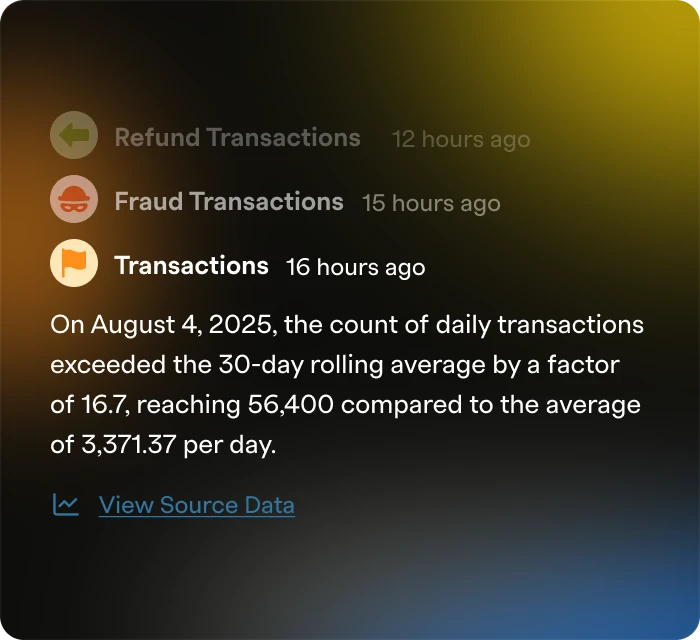
Decision-ready data
95% data freshness on subscriber state means engagement plays fire on what's true now — not what was true at last night's batch.
The native vs bolt-on architecture brief
A side-by-side comparison of native engagement and bolt-on CDP architectures across the four metrics finance and growth leaders care about most, including:
- The “pause” dividend: How top merchants drove a 337% increase in pause usage to retain customers who would have otherwise canceled
- The AI-driven subscriber: Why 43% of consumers are now comfortable with AI managing subscriptions, especially for fraud prevention and content personalization
Download the brief to see the full breakdown — and the diligence questions to ask any vendor in either architecture.
 See the data
The case for keeping engagement native
Compare your current engagement architecture against the native vs bolt-on benchmarks.
 Book your demo